Carl Jung Resources > Work Stages
Stages in the Work of Jung One may know that most of the ideas, concepts and theories of Jung occur in his confrontation with the unconscious. Basically, his work may be divided into four basic stages: Psychiatric Activity at Burgholzli clinic run by Dr. Bleuler This is the period of his work on the free associations and his psychological approach of schizophrenia. The important findings of this period will be used in Jung's maturity work.
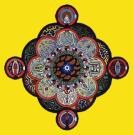
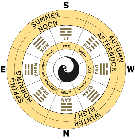
Such as proved by their letters exchange, Jung carried out a fervent activity in support of the "cause", that is the promotion of Freudian psychoanalysis. This period left its print on his book Symbols of Transformation. Nevertheless, the first signs of Jung's separation from Freudian theories emerge in this work. Confrontation with the Unconscious Jung gives up his medical career and withdraws from all positions previously held in the psychoanalytical movement. He makes a brutal break from Freud and, in almost complete solitude and a mood verging to schizophrenia, devotes himself to the study of his own unconscious images. This provides a constant source of inspiration for his mature work. Elaboration of Basic Analytical Theories and Jung's Maturity Work He is drawn to alchemy , wherein he finds a confirmation of his own theories concerning the individuation process. He wrote a monumental book - Psychology and Alchemy - in order to prove the close connection between the dreams of a patient and the stages of the alchemical work. He also talks about the symbolic parallelism between the mandala and the Self. He also deals with synchronicity, the I Ching - he met Richard Wilhelm, the German translator of the book and wrote a valuable introduction to the Wilhelm/Baynes English translation - yoga/zen/tibetan Buddhism and the UFO phenomenon.
This site addresses all these stages by sections, while trying to provide an as truthful and pragmatic image as possible of Jung's psychological work.
|

<= Home | Online Courses | Social | About Us ©AROPA, 2026. |